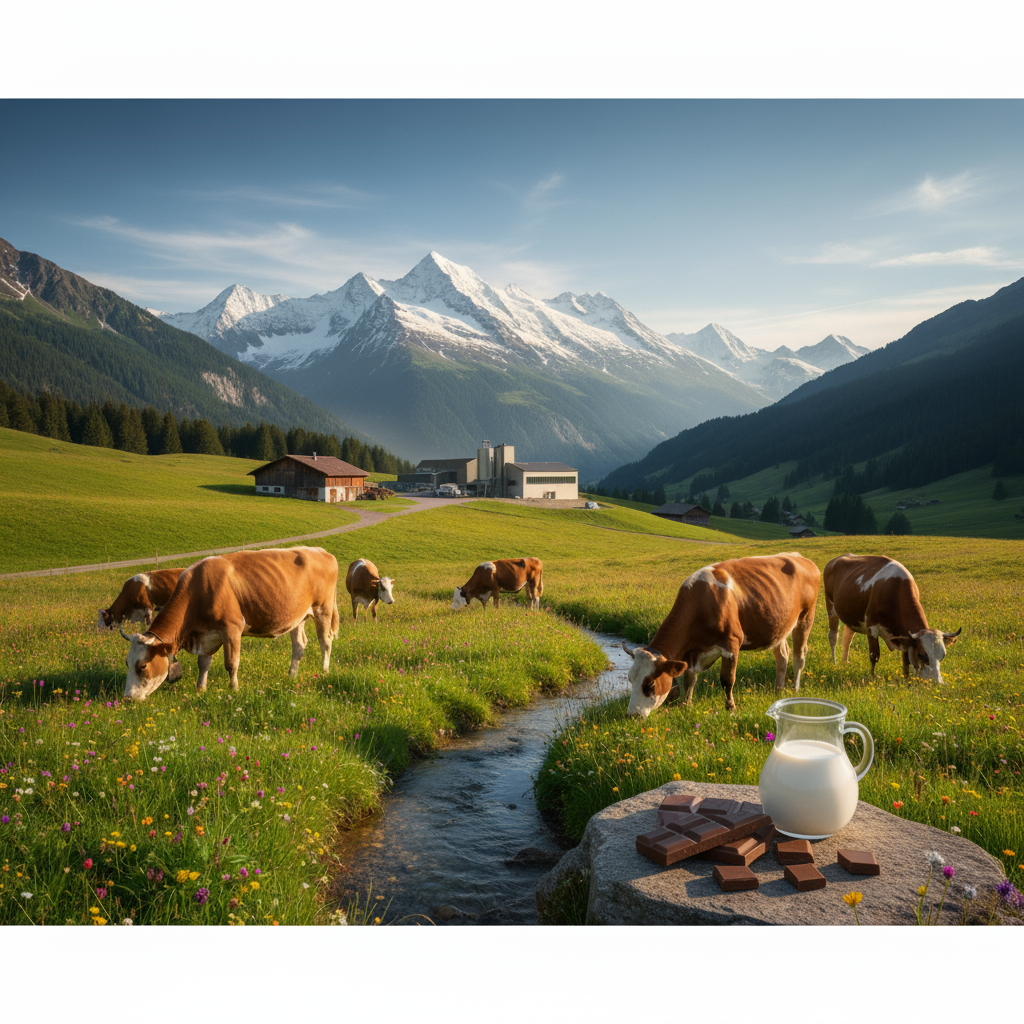
You've bitten into a piece of genuine Swiss chocolate and felt that signature, melt-in-your-mouth creaminess. While the quality of the cocoa is important, the true magic—the silken texture and rich, comforting flavor—comes from one exceptional ingredient: Swiss milk.
It's not just any milk. It's an ingredient steeped in the tradition of alpine farming, meticulous animal welfare, and centuries of dairy innovation. For anyone who loves milk chocolate, understanding the dairy behind it is key to appreciating why Switzerland remains the global gold standard.
⛰️ The Flavor Profile: A Taste of the Alps
The secret of Swiss milk begins high above the valleys, in the **Alpine and Pre-Alpine meadows**. Unlike industrial dairy operations, cows here graze freely on incredibly diverse pastures. This isn't just grass; these fields are a botanical cocktail of herbs, grasses, and alpine flowers.
This rich, varied diet is directly responsible for the unique composition of the milk. It affects the milk fat, which is where much of the flavor is stored.
The complex, herbaceous forage contributes to a distinct, superior fat and protein profile, resulting in milk that is naturally richer and more flavorful.
This pristine environment is also governed by some of the world's strictest animal welfare laws. Nearly 90% of Swiss cows participate in the federal "RAUS" (Regular Outdoor Run) program, guaranteeing regular access to pasture. This natural lifestyle, combined with pure mountain water and fresh air, contributes to the overall health of the herd and, consequently, the premium quality of the milk. The average Swiss dairy farm is small, caring for only about 26 cows per farm, allowing for hands-on, traditional care.
🐄 The Breed Advantage: Built for Quality, Not Just Volume
The cows themselves are an integral part of the Swiss chocolate story. The breeds favored in the Swiss Alps have been selectively bred for centuries to produce milk high in components essential for high-quality dairy products like cheese and chocolate.
The two major breeds are:
- The Brown Swiss (Braunvieh): This is the quintessential alpine cow. Prized for their hardiness, Brown Swiss cows produce milk known for its high concentration of protein and fat. This balance is crucial for achieving the perfect texture in chocolate.
- The Simmental (Fleckvieh): A strong, dual-purpose breed that also provides milk with excellent fat and protein levels.
The protein content, specifically the type of casein, is what makes the milk coagulate smoothly. Brown Swiss milk is particularly high in specific casein variants, making it ideal for processing into creamy dairy ingredients without compromising its structure or flavor. This **component-rich milk** is a major factor in why Swiss chocolate achieves its signature "melt."
🔬 The Innovation: From Liquid Milk to Velvety Creaminess
The final pillar of Swiss milk excellence lies in its processing. The legendary creaminess of Swiss milk chocolate is actually a product of a 19th-century invention: **solid milk chocolate** itself.
Before 1875, milk chocolate was a grainy, lumpy affair because water in fresh milk interferes with the chocolate-making process. The breakthrough came when Swiss confectioner **Daniel Peter** (a neighbor of Henri Nestlé) successfully used **condensed milk**—a product that removes much of the water while retaining the milk's creamy solids—to create the world's first successful, solid milk chocolate bar.
Swiss processors today maintain this dedication to meticulous handling:
- Condensing Expertise: Fresh milk is carefully reduced into **condensed milk** or **milk powder**. This gentle process must perfectly concentrate the milk's fats, proteins, and natural sugars without introducing off-flavors (like a burnt or caramelized taste) that would ruin the delicate chocolate blend.
- Quality Control: Swiss dairy production is subject to remarkably strict quality standards. For example, the legal limit for bacteria count (Plate Count) in raw cow's milk in Switzerland is less than 80,000 cfu/ml—a testament to exceptional hygiene and freshness from the farm.
This condensed, flavor-rich milk powder or liquid is blended into the cocoa mass and sugar before undergoing the long, crucial **conching** process. The high-quality milk solids create a protective layer around the fine cocoa particles, which, along with the high butterfat content, is what gives Swiss milk chocolate its unparalleled **silky-smooth mouthfeel** and slow, comforting melt.
The synergy of the biodiverse alpine environment, specialized dairy breeds, and pioneering processing techniques is the true magic behind the most beloved confectionery on earth. Swiss milk is far more than a filler; it’s a premium, complex ingredient that defines the entire Swiss chocolate experience.
← Back to Blog