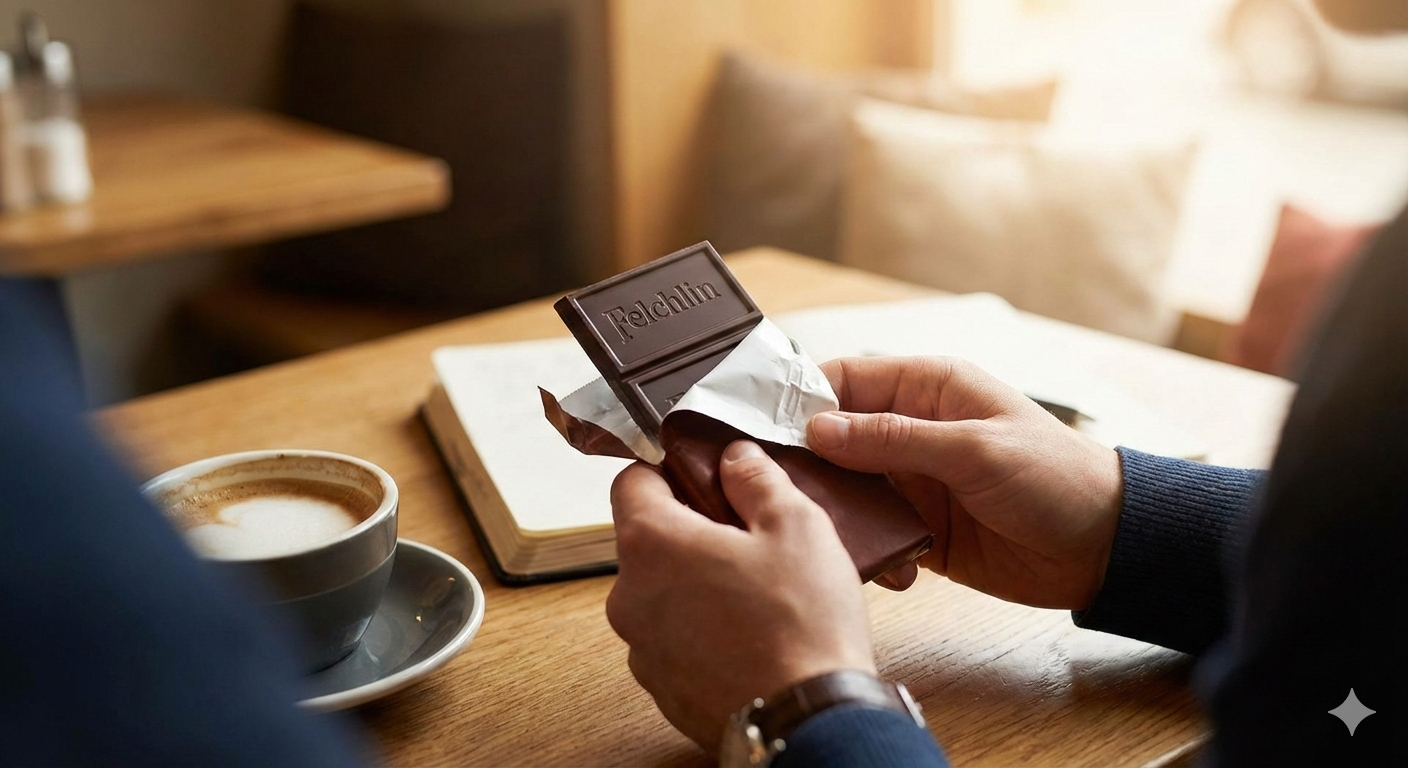
The Michelin Star’s Favorite Couverture: Deep dive into Felchlin
If you ask the average tourist to name a Swiss chocolate brand, you’ll get the usual suspects: Lindt, Toblerone, perhaps Sprüngli if they’ve walked through an airport recently. These are the giants of retail, the brands that have painted the world’s perception of creamy, sweet Swiss milk chocolate.
But if you ask a Michelin-starred pastry chef, a high-end master baker, or a serious chocolate connoisseur in Zurich or Tokyo what chocolate they actually use in their kitchens, the answer is frequently different. It is often spoken with a quiet reverence: Felchlin.
Max Felchlin AG is not interested in fighting for shelf space in your local supermarket. They are the "chocolate maker's chocolate maker." They produce ultra-premium *couverture*—the high-quality, high-cocoa-butter chocolate used as the foundational building block for top-tier desserts, truffles, and pastries. While they have a smaller public footprint than the retail giants, their influence on the global high-end culinary scene is massive.
From Honey to High-End Couverture: The History of Felchlin
Felchlin is not located in the industrial hubs of Zurich or Geneva. They are based in Schwyz, a deeply traditional canton in central Switzerland nestled between mountains and lakes. This is the heartland of Switzerland—Schwyz is, after all, where the country gets its name. It is also a place where people tend to do things "the right way," even if the right way takes three times as long and costs twice as much.
The company didn't start with chocolate. It was founded in 1908 by Max Felchlin as a modest trading company dealing in honey. Max was an enterprising fellow, and over the decades, the company shifted its focus based on market needs, moving into baking powders, fondant, and eventually, chocolate coatings. I like to think Max realized that while honey is nice, chocolate is what actually makes people tolerate a long Swiss winter.
The real transformation began later in the 20th century under the guidance of Max Felchlin Jr., and subsequently, the current leadership structure. They made a strategic pivot away from general baking supplies to focus almost exclusively on producing the absolute highest quality chocolate couverture possible. They realized they couldn't compete with industrial giants on volume, so they decided to compete in an arena where few others could follow: obsessive quality control and traditional processing.
Today, Felchlin operates out of a state-of-the-art facility in Ibach-Schwyz, yet their methods remain stubbornly rooted in tradition. They are a relatively small player in terms of tonnage compared to multinational conglomerates, but in the world of professional gastronomy, they are the undisputed heavyweights.
What Makes Felchlin Special? (A Personal Perspective)
To understand why Felchlin is special, you have to adjust your expectations of what "Swiss Chocolate" usually means. The stereotypical Swiss style—popularized by brands like Milka or standard Lindt—is characterized by high milk content, high sugar, caramel notes, and an incredibly smooth, rapid melt. It’s delicious, but it’s often monolithic; it tastes like "chocolate," not like "cacao." It’s the culinary equivalent of an easy-listening radio station: pleasant, but unlikely to change your life.
In my opinion, tasting Felchlin against standard supermarket chocolate is like comparing a complex, aged Cabernet Sauvignon to grape juice. Both are fruity liquids derived from grapes, but the intention and experience are worlds apart.
Felchlin’s defining characteristic is its commitment to traditional, long conching. Conching is the process of mixing and aerating liquid chocolate to develop flavor and texture. Industrial chocolate might be conched for as little as 6 to 12 hours to speed up production. Felchlin conches some of their Grand Cru chocolates for up to 72 hours. That is three days of constant movement just to get the flavor right. In our modern world of instant gratification, that level of patience borders on the miraculous.
Why does this matter? This extended process slowly drives off volatile acidity and unwanted bitterness without destroying the delicate, inherent flavor notes of the specific cacao bean. It creates a texture that is velvety rather than waxy. When you taste Felchlin, you aren't just tasting sugar and vanillin; you are tasting the actual berry notes, the earthy tones, or the floral hints of the cacao itself. It’s chocolate that demands you pay attention to it.
Another aspect I admire is their lack of flashy marketing. They don't hire celebrity tennis players to promote their bars. Their marketing budget goes into sourcing better beans and paying farmers more. There is a quiet confidence in their approach—they know the best chefs in the world will find them eventually.
Sourcing the Soul of the Chocolate: The Cacao
Because Felchlin focuses on flavor nuance rather than mass homogeneity, their cacao sourcing is perhaps the most critical aspect of their business. You cannot make complex chocolate from mediocre, bulk-commodity beans. It would be like trying to paint a masterpiece with a box of dried-out crayons.
Felchlin operates under a philosophy they call "Cacao Sélection Felchlin." This isn't just a marketing sticker; it’s a rigorous set of standards that often exceeds typical Fairtrade or organic certifications. They focus on direct relationships with farmers and cooperatives in specific regions known for "fine flavor" cacao.
They don't just buy beans; they invest in the communities. They commit to long-term contracts at prices significantly above world market rates, ensuring that farmers have the financial stability to tend to their crops properly. Quality cacao requires immense labor—proper fermentation and drying at the source are crucial. If farmers aren't paid enough, they cut corners here, and the final chocolate suffers. Felchlin understands that happy farmers make for much better truffles.
They source intensely aromatic beans from specific regions that offer distinct *terroir*:
- Venezuela (Sur del Lago): Known for complex, nutty, and slightly fruity profiles. This is the heart of their most famous creations.
- Madagascar (Sambirano Valley): Famous for bright, intense red berry and citrus notes. If you think chocolate can't taste like raspberries, try this.
- Bolivia (Beni region): Home to unique wild-growing cacao islands, offering robust, earthy flavors.
- Dominican Republic: Often provides a classic, balanced cocoa backbone with deep chocolatey notes.
Famous Products: It’s All About the Base
You generally won't find a box of "Felchlin Pralines" in a shop. Felchlin makes the *ingredient* that other chocolatiers—like the famous Sprüngli or small artisan shops in the Bernese Oberland—use to make their own pralines. Their fame rests entirely on their range of couvertures, sold mostly in large blocks or "pistoles" (small drops for easy melting) to professionals.
The Grand Cru Range
This is the pinnacle of their offering. These are single-origin chocolates designed to showcase the unique flavor profile of a specific region. They are complex, sometimes challenging, and always spectacular.
Their flagship is arguably the Maracaibo Clasificado 65% (Venezuela). It is often cited as one of the best dark couvertures in the world. It is incredibly balanced. It doesn't hit you with aggressive bitterness; instead, it opens with a coffee and prune aroma, transitions into orange blossom notes, and finishes with a long, roasted cocoa flavor. It is the gold standard for a reason. If you’ve ever had a truly world-class chocolate cake in a fancy hotel, there's a 50/50 chance this was the main ingredient.
Not Just Dark Chocolate
It would be a mistake to think Felchlin only cares about intense dark chocolate. Their approach to milk and white chocolate is equally rigorous and elevates these often-dismissed categories.
Their white chocolate, such as the Opus Blanc 35%, is a revelation for people who think they hate white chocolate. Most commercial white chocolate is just sugar, vanilla flavoring, and refined vegetable fats. Felchlin’s uses real, high-quality cocoa butter from their premium origins and pure Swiss milk. The result is something that actually tastes milky, creamy, and subtly like cocoa, rather than just cloying sweetness. It’s white chocolate for adults.
Integration of Ingredients
When Felchlin does integrate other ingredients—usually for specific giandujas (nut pastes) or bake-stable fillings—they apply the same sourcing rigor. They use premium Piedmont hazelnuts or top-tier almonds. They don't use artificial flavor essences to mask inferior nuts. It’s an honest approach to ingredients that is increasingly rare.
Top Products to Try and Final Verdict
Because Felchlin is primarily B2B (Business to Business), finding it can be an adventure. You won't find it at Coop or Migros. In Switzerland, you need to look for specialized high-end baking supply stores or select gourmet food halls like Globus, which sometimes stock their small retail-sized bars designed for tasting.
If you can get your hands on them, these are the essential tries:
- Maracaibo Clasificado 65%: As mentioned, this is the benchmark. If you want to understand what sophisticated Swiss chocolate tastes like outside of the milk-heavy stereotype, start here. It’s accessible yet profound.
- Bolivia 68% (Wild Cacao): This is for the adventurous palate. Made from wild-harvested beans in the Amazon basin. It is robust, earthy, with notes of dried tobacco and a citrusy acidity. It’s a wild ride of a chocolate that might make you question everything you knew about the bean.
- Edelweiss 36% (White Chocolate): The best way to challenge your prejudice against white chocolate. It is incredibly creamy, with a genuine dairy flavor and a clean finish.
Would I buy it, and is it costly?
Personally? Yes, absolutely. But I buy it differently than I buy other chocolate. I don't buy Felchlin to munch on mindlessly while catching up on emails. I buy a block of it when I am baking a serious chocolate tart for a dinner party, or when I want to sit down with a glass of port and really analyze what I'm tasting. It’s a treat, not a staple.
Is it costly? Yes. It is significantly more expensive than supermarket chocolate, and pricier even than premium retail brands like Lindt's Excellence line. You are paying for the 72-hour conching, you are paying for the fair wages of a farmer in Madagascar, and you are paying for Swiss precision manufacturing in the heart of Schwyz. It’s not "budget-friendly," but in the world of chocolate, as in most things, you get what you pay for. If you want the secret weapon of the world's best pastry chefs, you have to pay the entry fee.
Felchlin is the quiet, confident backbone of high-end Swiss confectionery. They prove that Switzerland's reputation for chocolate isn't just based on historical marketing, but on an ongoing, deeply serious pursuit of perfection that happens far away from the tourist trail. Would you like me to help you find a supplier for their Grand Cru range in your region?
← Back to Blog